Marshfield is a town that sits at the convergence of two distinct landscapes — and both of them drive significant mosquito and tick pressure. To the east, you have the South River, the Green Harbor River, the tidal marshes that line the coastline between Brant Rock and Green Harbor, and the wetland systems that push inland through the middle of town. To the west and north, you have the heavily wooded residential corridors — the stretches off Route 139, the neighborhoods backing up to the North River, the properties along the Pembroke and Hanover borders — where deer move through suburban backyards on established corridors and blacklegged ticks are a consistent seasonal presence.
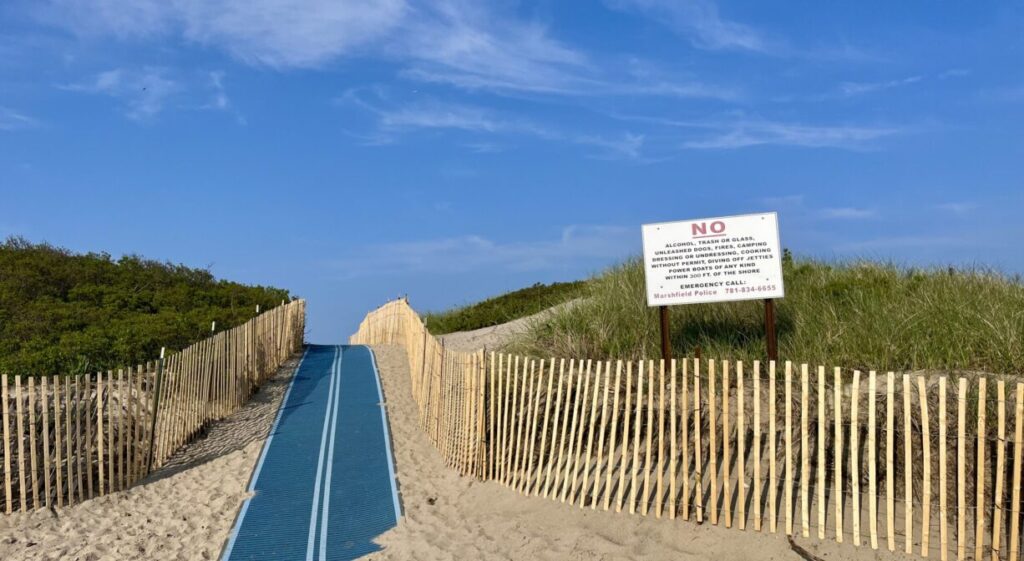
Marshfield homeowners frequently deal with both sides of this equation at once. A property on Furnace Street or off Ocean Street can have marsh-sourced mosquito pressure from one direction and woodland tick exposure from the other. This post covers what that actually means in practice, how SSMC’s exterior program addresses it, and what a full season of treatment looks like for Marshfield properties.
Why Mosquitoes Are Worse in Marshfield
The short answer: Marshfield has water everywhere.
The South River, the Green Harbor River, the tidal marshes along the Brant Rock and Green Harbor coastline, the wetlands that push inland through the middle of town — Marshfield is essentially surrounded by the kind of standing and slow-moving water that mosquitoes need to breed. And unlike a birdbath you can tip over or a clogged gutter you can clean out, most of this water is on public land and not going anywhere.
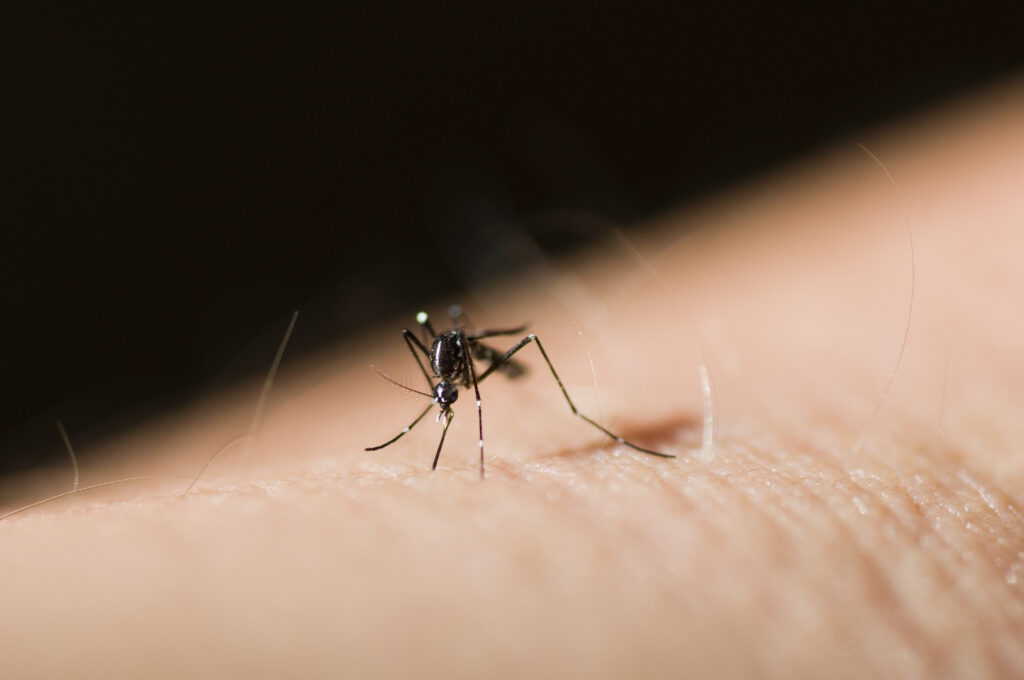
What makes Marshfield a step above typical inland South Shore towns is the coastal marsh system. Salt marsh mosquitoes breed in the tidal areas along the coast — and they’re strong fliers. They don’t stay at the waterline. On the right evening, following a high tide in July or August, you can be sitting in a yard a mile or more from the water and still feel the effects. That’s what Marshfield homeowners near Brant Rock, Green Harbor, and the river corridors are dealing with on the worst nights of summer.
Add in the rain-driven mosquito surges that hit every South Shore town after a wet stretch, the morning and evening activity from the common house mosquito, and the late-summer species that emerge from the cattail marshes — and you end up with a season that can feel relentless without a consistent exterior program in place.
The North River and South River corridors are worth calling out specifically. Properties along River Street, Ferry Street, and the stretches that approach either river from the inland neighborhoods are dealing with active breeding habitat right next door, all season long. These aren’t occasional nuisance situations — they’re sustained pressure from a source you can’t eliminate.
Why Ticks Are a Real Concern in Marshfield
The western and northern parts of Marshfield — the neighborhoods off Route 139, Furnace Street, the Oak Street corridor, the stretches toward the Pembroke and Hanover borders — are classic South Shore tick country. Wooded lots, conservation parcels, and a healthy deer population that moves through suburban backyards on routes it’s been using for decades.
Deer don’t transmit Lyme disease directly, but they carry ticks across the landscape. Where deer travel regularly, ticks follow. If you’ve noticed deer cutting through your yard, or your property backs up to any kind of wooded or brushy area, you’re in tick habitat. That’s true whether you’re in a newer subdivision off Route 139 or an older property that’s always had woods behind it.
Plymouth County is one of the highest Lyme disease counties in Massachusetts. That’s not a statistic to be alarmed by, but it’s the real-world context for why Marshfield families take tick control seriously. Finding a tick on your child or your dog after time in the backyard is a common enough experience in this town that it stops feeling like a fluke pretty quickly.
The risk is highest in late spring and early summer — that’s when the smallest, hardest-to-spot tick nymphs are most active — and again in October and November when adult ticks pick up for a fall feeding push before winter.
How the SSMC Exterior Program Works in Marshfield
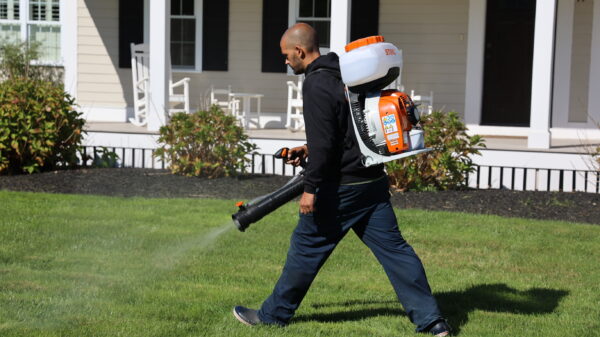
SSMC treats mosquitoes and ticks together as a single bundled exterior program. Every visit covers both. There is no split service — the mosquito and tick programs are designed as a unit, executed in one technician visit on the same schedule.
The standard program is eight visits across the season, spaced on a three-week interval, starting in late April or early May and running through October.
What Gets Treated
Every visit covers the full exterior of the property — the entire yard from the house to the property edge. For a typical Marshfield property, that includes:
- Open lawn areas — the complete turf surface across the property
- Perimeter shrubs and ornamental plantings — where adult mosquitoes rest during daylight hours
- Low-hanging tree canopy — shaded understory along the lawn edge where mosquitoes congregate
- Ground cover beds — pachysandra, vinca, ivy, and similar plantings that hold moisture and provide dense harborage for both mosquitoes and ticks
- Wooded borders and transition zones — the lawn/wood interface where blacklegged tick density is consistently highest
- Stone walls and fence lines — tick harborage zones throughout Marshfield’s older residential neighborhoods
- Under decks and around outbuildings — especially relevant where structures are adjacent to or shaded by wooded areas
- Leaf litter and debris accumulation zones — wherever organic material collects along foundation edges, fences, or property lines
The full-property approach is what produces yard-wide results. Mosquitoes — including salt marsh species flying in from the river corridors — move across open areas and settle across the full property. Treating the complete exterior maintains protection throughout the yard, not just at the edges.
Treatment Timing
The three-week interval maintains residual protection between visits and addresses successive mosquito generations as they emerge. For Marshfield’s tick population, the critical timing is the treatment that lands before Memorial Day — catching nymphal blacklegged tick activity before it peaks in late May and June. The fall treatment in October addresses the adult blacklegged tick, which remains host-seeking on warm days through November.
Organic Options
SSMC offers organic botanical treatment for Marshfield homeowners who prefer it, using chrysanthemum-derived pyrethrins and related natural active ingredients. Many Marshfield families choose organic for properties near the river corridors, marsh systems, or conservation land. Full-property coverage is identical regardless of formulation — what changes is the active ingredient and its residual duration.
A Few Marshfield-Specific Things Worth Knowing
If you’re near Brant Rock or Green Harbor, you’re closest to the tidal marsh systems and you’ll likely feel the worst of the late-July mosquito pressure. A full-season program starting in late April is the right approach — getting on a consistent schedule before the season peaks is what makes the difference, rather than trying to react after it’s already bad.
If you’re along the North or South River, you’re dealing with continuous mosquito pressure from breeding habitat that borders your property all season. You can’t eliminate the source, but you can keep your yard itself in a treated state so that adult mosquitoes landing on your side of the line don’t stick around. That’s exactly what the exterior program does.
If you’re in the western neighborhoods near Route 139 or the Pembroke border, tick pressure is your primary concern. The combination of deer corridors and wooded borders in that part of town means a yard that looks perfectly manicured can still have active tick pressure coming in from the edges. Getting the first treatment down before Memorial Day is critical — that’s before nymphal tick season peaks.
If you’re near conservation land, the exterior program matters more, not less. Conservation borders are a constant pressure source that never gets treated on the other side. SSMC’s full-property approach covers your entire yard including the transition zone at your property edge — maintaining that buffer consistently through the season is what holds back the ongoing pressure from next door.
Pricing and How to Save
The combined seasonal program covers the full exterior of your Marshfield property across eight visits. Most residential properties fall in the standard tier, with larger lots quoted based on treatable acreage.
Prepay discount: Signing up and paying for the full season before April 1 earns a 15% discount off the total — the simplest way to reduce the cost if you know you want full-season coverage.
Referral program: Refer a neighbor who signs up and you get a $75 credit. The neighbor gets $50 off their first season. In Marshfield neighborhoods where several properties share the same river border, woodline, or marsh proximity, getting neighbors on the same program actually reinforces everyone’s protection — adjacent treated properties reduce the shared source population on all sides.
Getting Started
The best time to get on the schedule is before you need it. For Marshfield, that means reaching out in March or early April so the first treatment lands before mosquito season builds and before tick activity peaks around Memorial Day.
To get a quote, visit the Marshfield service area page, check out the services page for full program details, or head to the contact page to request a callback. Every program includes full-property mosquito and tick treatment as a bundled exterior service — lot size and proximity to water or wooded areas are the main things that shape the quote.
SSMC has been treating Marshfield properties since 2012. The river corridors, the coastal marsh pressure, the tick habitat in the western neighborhoods — it’s well-known territory for the crew that covers Marshfield every season.
South Shore Mosquito & Tick Control provides exterior mosquito and tick treatment in Marshfield and 42 additional towns across the South Shore and Cape Cod. View all service areas →