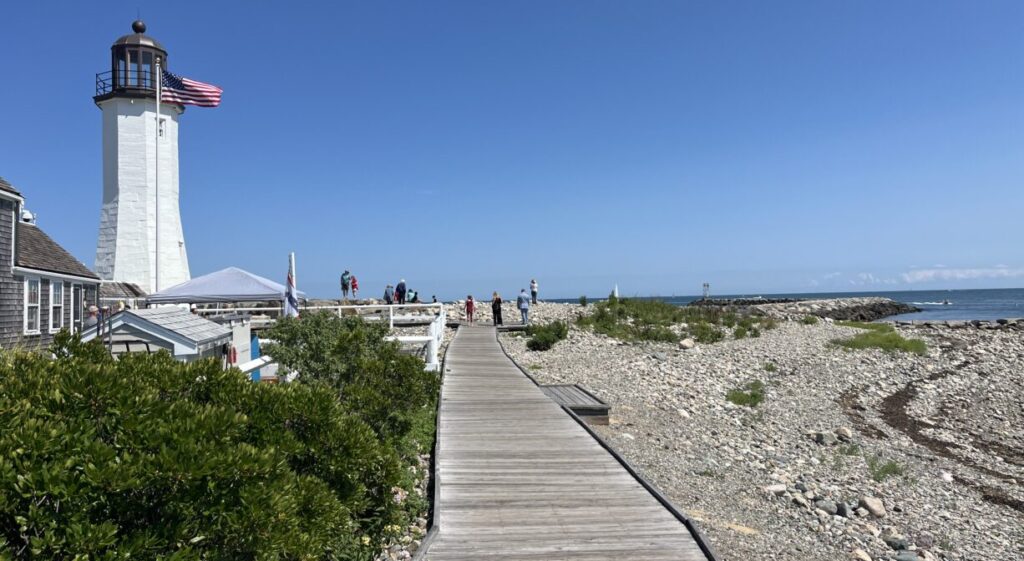
Scituate is one of those towns where outdoor living is the whole point. The harbor, the beaches along Minot and Sand Hills, the walking paths through the North River Wildlife Sanctuary, the summer evenings on the deck with the water in view — it’s why people live here and why people come back every year. It’s also, unfortunately, why mosquitoes and ticks are a more persistent problem in Scituate than in most inland South Shore towns.
The same geography that makes Scituate worth living in creates some of the most consistent mosquito and tick pressure on the coast. This post covers what’s actually driving that, how SSMC’s exterior program addresses it for local properties, and what a full season of treatment looks like in this town.
Why Mosquitoes Are a Problem in Scituate
Scituate’s mosquito pressure is shaped by two things working together: its coastal marsh systems and the freshwater wetlands that run through its inland neighborhoods.
On the coastal side, the salt marshes along the North and South rivers, the wetlands behind Scituate Harbor, and the marsh areas along Egypt Beach and the Glades create productive breeding habitat throughout the warm season. Coastal marsh mosquitoes are strong fliers. They don’t stay at the waterline — on the right evening following a high tide in July or August, they move inland across neighborhoods that may feel well removed from the water. Scituate harbor-side properties, the Humarock area, and homes along the river corridors feel this most acutely, but the flight range means it’s not limited to the waterfront streets.
On the freshwater side, the wetlands that run through Scituate’s inland neighborhoods — particularly in the areas off Route 3A, around Bound Brook Pond, and through the conservation corridors north toward Marshfield — create sustained breeding pressure throughout the season. After any significant rain, standing water accumulates in low spots throughout these neighborhoods and turns into active breeding habitat within days.
What Scituate homeowners near the harbor or the river often describe is an intensity to the evening mosquito activity that feels different from what friends in drier towns deal with — and they’re right. The layering of coastal marsh pressure on top of neighborhood-level freshwater pressure is what produces that. It’s not one source, it’s several, and they run through different parts of the season.
Summer evenings in Scituate can be genuinely difficult without treatment. The pressure tends to build through June, peak through July and August, and remain meaningful into September — particularly in years with above-average summer rainfall that keeps breeding habitat active through the back half of the season.
Why Ticks Are a Consistent Concern in Scituate
Scituate’s tick situation is driven by its wooded inland corridors and the deer population that moves through them.
The neighborhoods running west and north of the harbor — the stretches off Country Way, the areas near the North River Wildlife Sanctuary, properties along the Marshfield border — are classic South Shore tick habitat. Wooded lots, conservation land adjacency, and established deer corridors that connect one wooded patch to the next create the conditions where blacklegged tick populations stay consistent year after year.
Scituate has a meaningful deer presence across its inland neighborhoods. Deer carry adult ticks through the landscape on established travel routes — the wooded edges, the conservation buffers, the brushy strips between neighborhoods. White-footed mice, which thrive in that same edge habitat, are the primary source of Lyme-causing bacteria in the local tick population. The combination keeps tick pressure well established across Scituate’s wooded residential areas regardless of what’s happening at the coast.
Plymouth County is one of the highest Lyme disease counties in Massachusetts. For Scituate families with wooded backyards, conservation borders, or properties near the North River corridor, that’s the local context for tick exposure. Finding ticks on children or dogs after ordinary backyard time — not a hike, just the yard — is a common enough experience in the wooded parts of Scituate that most families take it seriously after the first season or two.
Tick pressure peaks twice. The first and most important window is late May through June, when the smallest nymphal ticks are active and responsible for a large share of Lyme exposures. They’re hard to spot and easy to miss on a tick check. The second window is October through November, when adult ticks are host-seeking on warm fall days. Both windows fall outside of what most people think of as “bug season,” which is part of why Scituate families who aren’t on a program keep getting surprised by tick activity in spring and fall.

How the SSMC Program Works
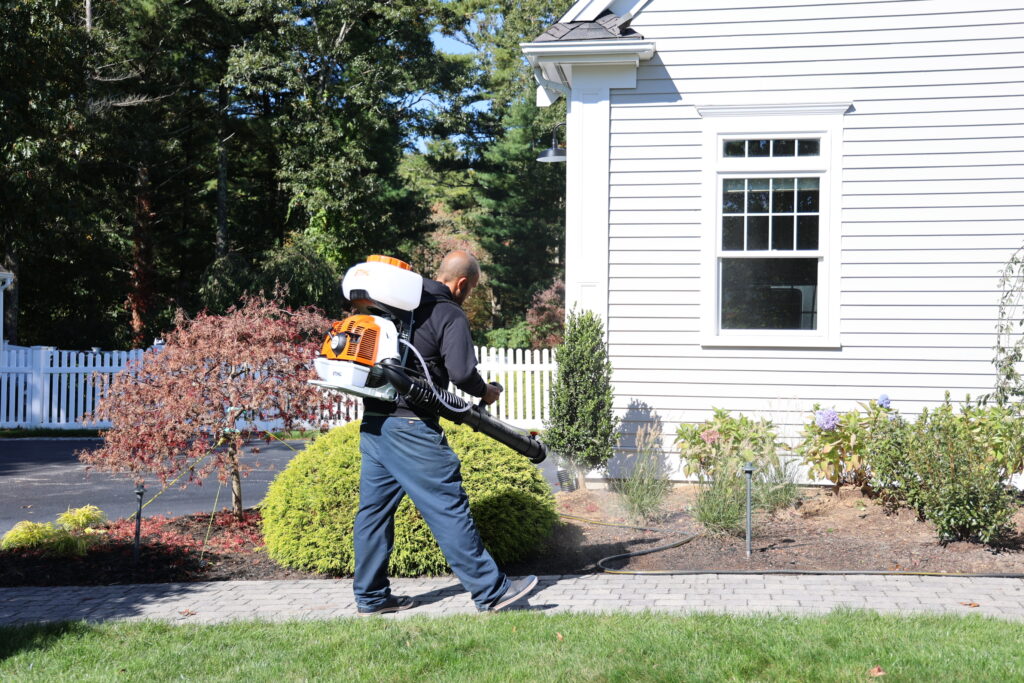
SSMC treats mosquitoes and ticks together as a single bundled exterior program. Every visit covers both — on the same schedule, in one technician visit. The standard program is eight visits across the season, spaced three weeks apart, starting in late April or early May and running through October.
Full Property, Every Visit
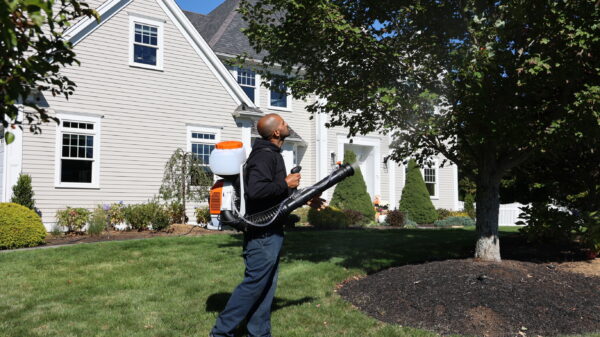
Every treatment covers the complete exterior of the property — the full yard, not selected areas. That includes open lawn across the whole property, not just the shrub borders or the wood edge. A full visit also covers:
- Foundation plantings and ornamental beds
- Shrubs and low-hanging tree canopy along the lawn edge
- Ground cover plantings — pachysandra, vinca, ivy — that hold moisture and provide harborage for both mosquitoes and ticks
- The full transition zone between lawn and any wooded or naturalized area at the back of the property
- Stone walls and fence lines, which are consistent tick harborage zones throughout Scituate’s older neighborhoods
- Under decks and around outbuildings
- Leaf litter and debris accumulation zones along edges and fence lines
Open lawn is included in every treatment because mosquitoes don’t confine themselves to the shrubs and ticks move through the yard on animals that cross the whole property. Treating the complete exterior is what gives you results across the yard rather than just along the perimeter.
The Three-Week Schedule
The timing between visits is calibrated to the mosquito life cycle — from egg to biting adult takes roughly 10 to 14 days under summer conditions. Treating every three weeks keeps each application ahead of the next generation coming up. In Scituate, where coastal and freshwater breeding pressure can replenish the local adult population quickly after a treatment, staying on that schedule matters. A gap in coverage gives the population more room to rebuild than it would in a less pressure-heavy town.
Organic Option
SSMC offers an organic treatment option for Scituate homeowners who prefer it — particularly relevant for properties near the harbor, the river marshes, or conservation land where runoff paths and adjacent habitat are a consideration. The organic formulation uses naturally derived active ingredients and provides the same full-property coverage as the conventional program. It breaks down somewhat faster between visits, which many Scituate families near the water find is the right tradeoff.
A Few Scituate-Specific Things Worth Knowing
If you’re near the harbor or the North or South River corridor, you’re dealing with coastal marsh mosquito pressure that is not generated on your property and not something you can eliminate. What SSMC’s exterior program does is treat the resting and harborage surfaces on your property consistently, so that adult mosquitoes moving in from the marsh don’t find a place to settle and stay. This is the realistic and effective approach to coastal mosquito pressure — you control your side of the equation.
If you’re in the Humarock area, the peninsula geography concentrates mosquito pressure in a way that mainland neighborhoods don’t face in the same way. Humarock properties benefit significantly from a full-season exterior program started early, before the coastal species build through June and July.
If your property borders the North River Wildlife Sanctuary or any conservation land, you’re adjacent to a continuous tick pressure source that never gets treated on the other side. Consistent full-season exterior treatment on your property — covering the full transition zone at your property edge — is what holds back that ongoing pressure.
If you’re in the wooded inland neighborhoods off Country Way or near the Marshfield border, tick pressure is your primary concern and the pre-Memorial Day first treatment is the most important of your season. Getting on the schedule in March or April means the first application is working before nymphal tick season peaks in late May.
Pricing and How to Save
The combined seasonal program covers the full exterior of your Scituate property across eight visits. Most Scituate residential properties fall in the standard tier. Larger lots are quoted based on treatable acreage.
Prepay discount: Paying for the full season before April 1 earns a 15% discount off the total. For Scituate homeowners planning a full season, signing up early is the most straightforward way to reduce the overall cost.
Referral program: Refer a neighbor who signs up and you receive a $75 credit. The neighbor gets $50 off their first season. In Scituate neighborhoods where several properties share the same harbor-side exposure, river corridor, or wooded border, coordinating with neighbors reinforces protection on all sides — adjacent treated properties reduce the shared source population.
Group discounts: For clusters of neighbors, HOAs, or multi-lot families coordinating together, SSMC offers group and multi-property pricing. Worth asking about if you’re thinking about bringing in more than one household.
Frequently Asked Questions from Scituate Homeowners
We’re right on the harbor. Will treatment actually help given where the mosquitoes are coming from? Yes — and this is the most important thing to understand about coastal mosquito pressure. You can’t eliminate the marsh breeding source, but you can treat the property those mosquitoes land on. Adult coastal marsh mosquitoes that fly in from the water need to rest somewhere before they bite. SSMC’s exterior program treats those resting surfaces consistently across your full property, which significantly reduces the population that’s present and active on your side of the equation.
Are there any restrictions on treatment near the harbor or the river? SSMC follows all Massachusetts setback and buffer requirements for pesticide application near coastal areas, rivers, and wetlands. The technician reviews each Scituate property individually on the first visit and treats accordingly within applicable state regulations. Barrier spray is applied to vegetation — not to open water or tidal areas.
We back up to the North River Wildlife Sanctuary. Does that complicate things? Conservation borders are one of the highest-pressure scenarios in Scituate for both mosquitoes and ticks. The consistent pressure from adjacent untreated land is exactly why a full-season program matters more for these properties, not less. SSMC treats the full exterior of your property including the transition zone at your property edge — maintaining that buffer consistently through the season is what produces results against ongoing pressure from next door.
My family uses the yard constantly in summer. When should we start? March or early April for scheduling, with the first treatment landing in late April. For Scituate, starting early on both ends — before coastal mosquito season builds in late May and before nymphal tick activity peaks around Memorial Day — is what sets up the whole season correctly.
Getting Started
To get a quote for your Scituate property, visit the Scituate service area page, review full program details on the services page, or head to the contact page to request a callback. Every program includes full-property mosquito and tick treatment as a bundled exterior service — lot size and proximity to coastal or wooded areas are the main inputs for the quote.
SSMC has been treating Scituate properties since 2012. The harbor-side coastal pressure, the North River corridor, the inland wooded neighborhoods near the Marshfield border — it’s familiar territory for the crew that covers Scituate every season.
South Shore Mosquito & Tick Control provides exterior mosquito and tick treatment in Scituate and 42 additional towns across the South Shore and Cape Cod. View all service areas →