We all know the itchy aftermath of a mosquito bite. We know the high-pitched whine that signals their arrival. But most people only encounter mosquitoes during their final, aerial stage of life. The reality is that mosquitoes live two completely different lives: one entirely submerged in water, and one in the air.
Understanding the four distinct stages of the mosquito life cycle—Egg, Larva, Pupa, and Adult—is key to understanding how they survive, how they spread disease, and how we can control them.
Here is a visual journey through the life of the world’s most annoying insect.
Stage 1: The Egg (The Stealthy Beginning)
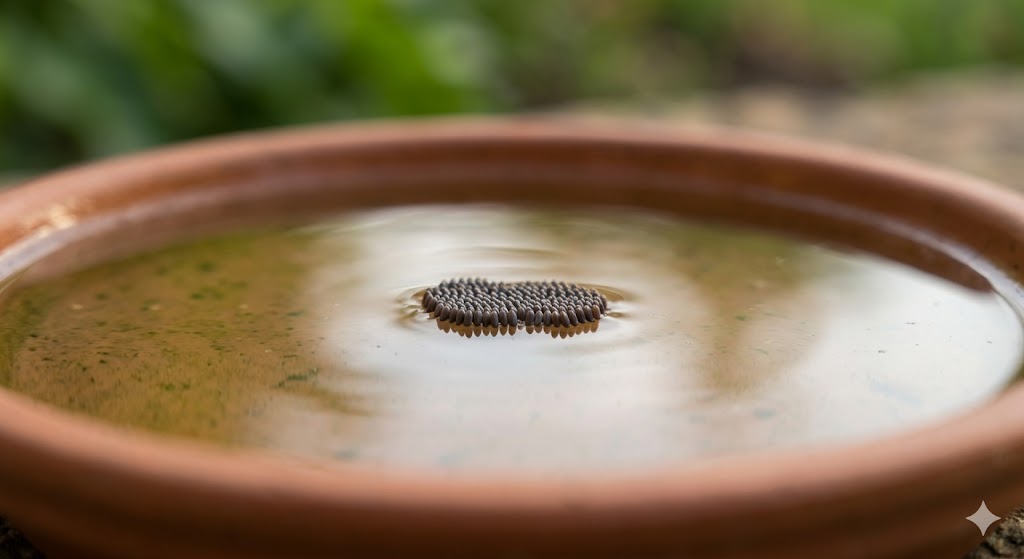
The cycle begins when a female mosquito takes a blood meal. She needs the protein to develop her eggs. Once ready, she seeks out standing water. This doesn’t need to be a lake; a forgotten bucket, a clogged gutter, or even a discarded bottle cap will do.
Some species lay eggs individually, but many Culex mosquitoes lay them in rafts. A single raft can contain up to 300 tiny, logic-defying eggs glued together, dark and elongated like microscopic cigars. They float on the surface tension of the water, perfectly safe until they are ready to hatch.
Stage 2: The Larva (The “Wiggler”)
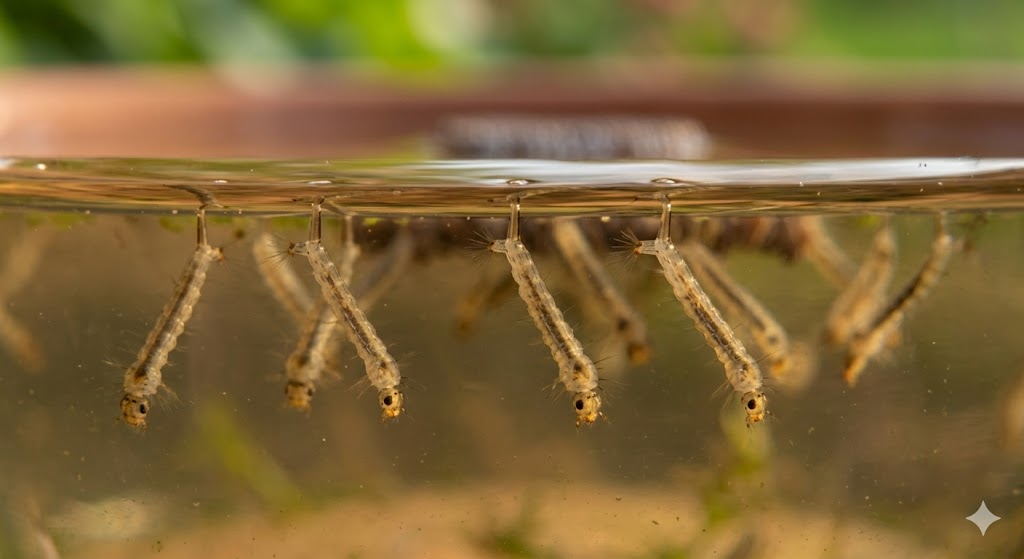
Within 24 to 48 hours, the eggs hatch. The creatures that emerge bear no resemblance to the adult mosquito. These are larvae, commonly known as “wigglers.”
Mosquito larvae are entirely aquatic. They swim with a distinctive, jerky, S-shaped motion. While they live in the water, they still must breathe air. They do this through a specialized tube called a siphon, located at their tail end. You will often see them hanging upside down from the water’s surface, piercing the tension with their siphon to take in oxygen. They feed voraciously on microorganisms and organic matter in the murky water, molting four times as they rapidly grow.
Stage 3: The Pupa (The “Tumbler”)
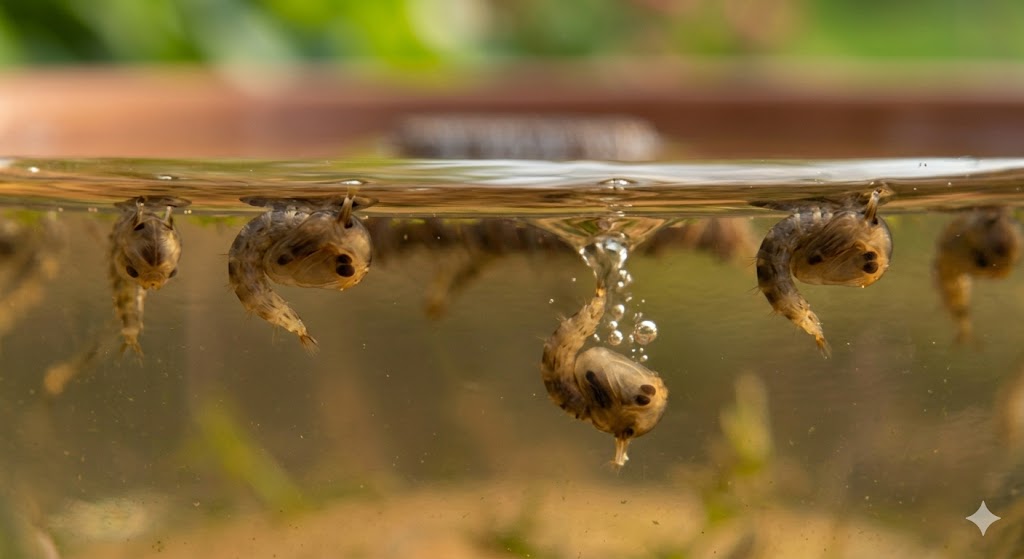
After the fourth molt, the larva transforms into a pupa, often called a “tumbler.” This is the mosquito equivalent of a butterfly’s chrysalis. It is a non-feeding stage, but unlike many insect pupae, the mosquito pupa is highly active.
The pupa is comma-shaped, featuring a large cephalothorax (head and thorax combined). It still lives in the water and breathes air, but now it uses two ‘trumpets’ located on its back. If disturbed, it will “tumble” wildly downward in a somersaulting motion to escape danger, then slowly float back to the surface. Inside this casing, the larval tissues are being completely reorganized into the body of the adult flying insect.
Stage 4: The Adult (The Flying Menace)
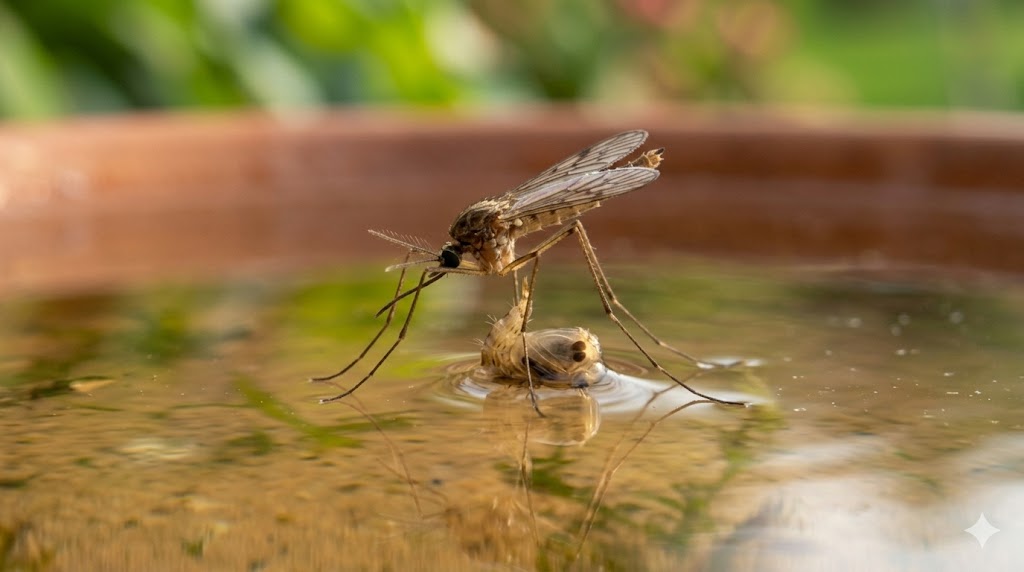
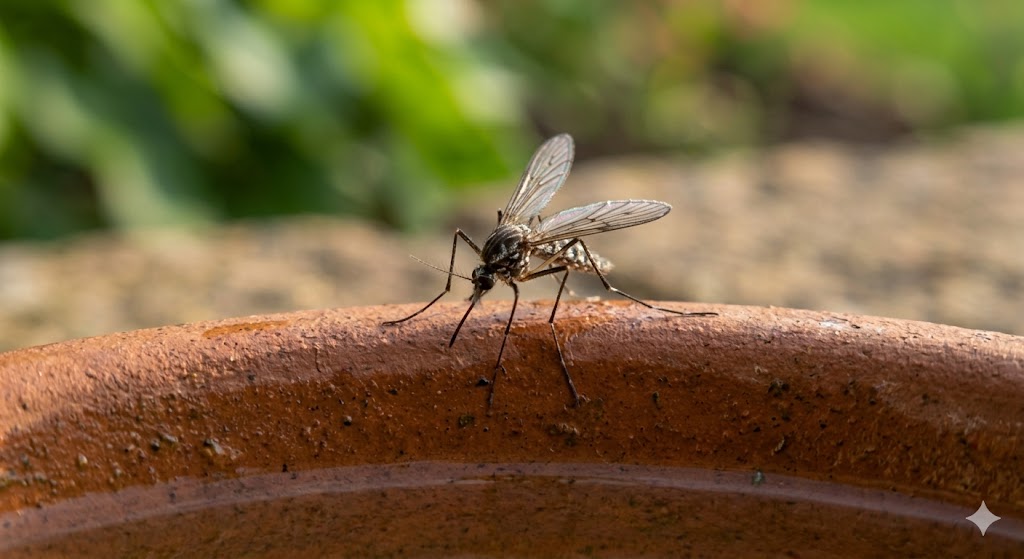
After a few days, transformation is complete. The pupal skin splits along the back. This is the most vulnerable moment in a mosquito’s life. The adult mosquito must carefully extricate itself from its old skin, using the discarded pupal case as a tiny raft while its soft body and wings dry and harden.
If it can avoid being eaten by a fish or spider during this critical emergence, it takes flight. Its primary goals now are to mate and, for the female, to find that blood meal to start the entire cycle over again. The adult stage, which lasts only a few weeks, is the only time they leave the water and encounter us.
How to Get Ahead of the Swarm
As you can see, the mosquito life cycle is a fast-moving assembly line. A single forgotten saucer of water can produce hundreds of new biters in just over a week. With the warm, wet conditions we’re expecting, the mosquito population is poised to explode this summer. By the time you’re slapping them off your arm during a July BBQ, the cycle is already out of control.
The best way to reclaim your backyard is to disrupt the cycle before it starts. This is where the experts come in.
Why Call Us – South Shore Tick and Mosquito?
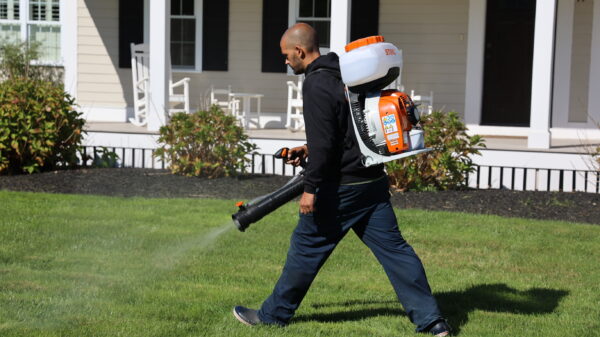
You shouldn’t have to spend your summer hiding indoors or dousing yourself in heavy chemicals. We specialize in professional-grade barrier protection that targets mosquitoes where they live and breed.
- Targeted Protection: We don’t just spray; we identify the “hot spots” in your yard where larvae hide.
- Preventative Strike: Getting ahead of the first “brood” of the season prevents exponential growth later in the summer.
- Local Expertise: We understand the specific climate and environment of the South Shore, ensuring your treatment is as effective as possible.
Don’t wait for the first itchy bite to realize you have a problem. Get ahead of the swarm. Contact us today to schedule your yard spray and ensure your summer is spent enjoying the outdoors, not fighting it.