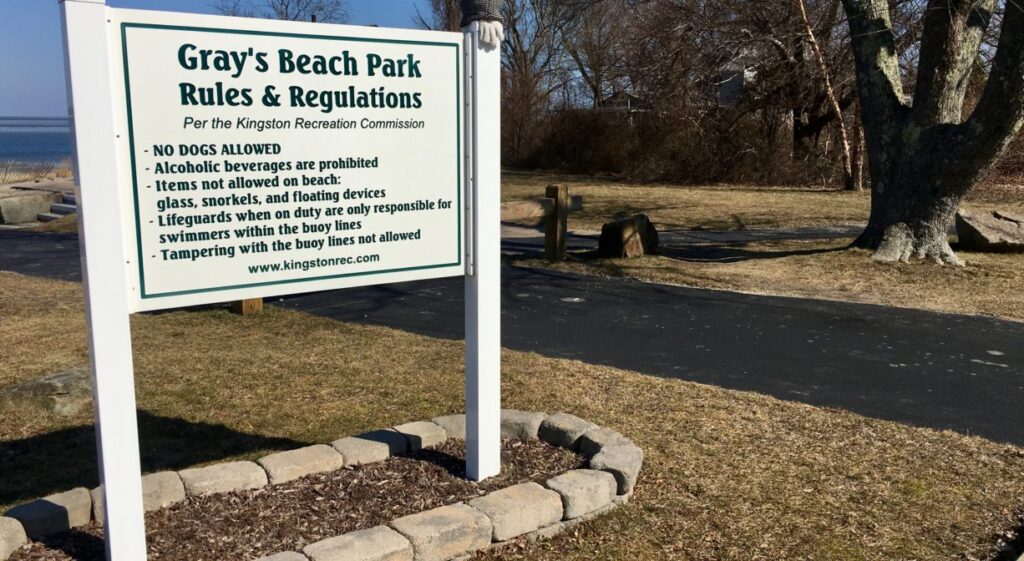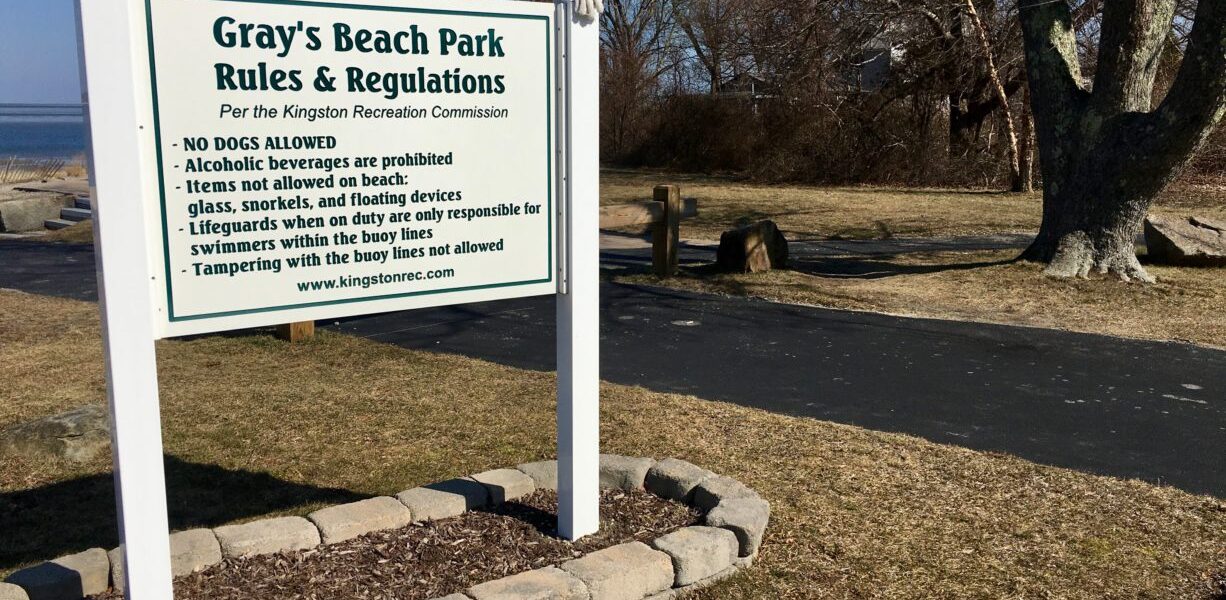
Kingston sits at the center of South Shore Mosquito & Tick Control’s service area for a reason. Between Silver Lake, the Jones River corridor, the cranberry bogs off Elm Street, and the wooded parcels that back up to Plymouth County conservation land, Kingston has nearly every environmental condition that drives mosquito and tick pressure in southeastern Massachusetts. If you’ve noticed that your backyard feels unusable in July, or you’ve found ticks on your kids or pets after time in the yard, the geography is a large part of why.
This post covers what Kingston homeowners face specifically, what a professional mosquito and tick control program looks like for local properties, and how to get started.
Why Kingston Has High Mosquito and Tick Pressure
Standing Water and Wetlands
Mosquitoes need standing water to breed. Kingston has it in abundance. Silver Lake — a drinking water reservoir — creates the kind of large, stable water body that sustains mosquito populations throughout the warm season. The Jones River and its adjacent wetlands add miles of marsh-edge habitat. Add residential standing water sources (gutters, tarps, low spots, birdbaths) to that base and you have reliable breeding pressure from May through October.
The species that dominate in Kingston are the same ones found throughout Plymouth County: Culex pipiens (the common house mosquito, a West Nile Virus vector), Aedes vexans (a floodwater species that surges after rain), and Coquillettidia perturbans (a marsh species active in late summer). All three respond well to professional barrier spray programs.
Tick Habitat
Kingston’s tick pressure comes from its wooded suburban layout. Most residential streets have properties backing up to treelines, conservation parcels, or scrubby transition zones — exactly the edge habitat where blacklegged ticks (Ixodes scapularis, the deer tick) are most concentrated.
Blacklegged ticks don’t move far on their own. They rely on white-footed mice (the primary reservoir for Lyme disease bacteria), deer, and other hosts to carry them through the landscape. Kingston has healthy populations of both. The result is that properties anywhere near a wooded border carry meaningful tick exposure risk, particularly during nymphal tick season (May through July) and adult tick season (October through November).
Plymouth County consistently reports some of the highest Lyme disease case rates in Massachusetts. Kingston homeowners are not in a low-risk area.
What Professional Mosquito Control Looks Like in Kingston
South Shore Mosquito & Tick Control has been treating Kingston properties since 2012. The standard program is a seasonal barrier spray applied on a three-week interval — eight treatments across the season, starting in late April or early May and running through October.
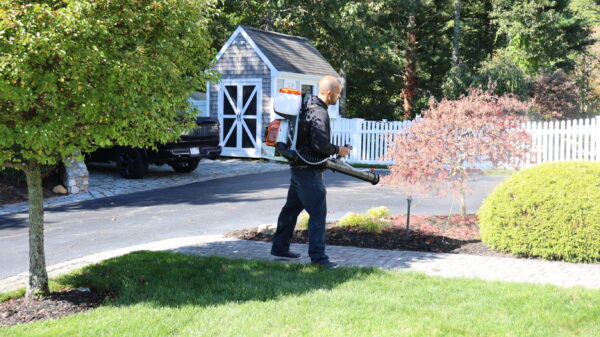
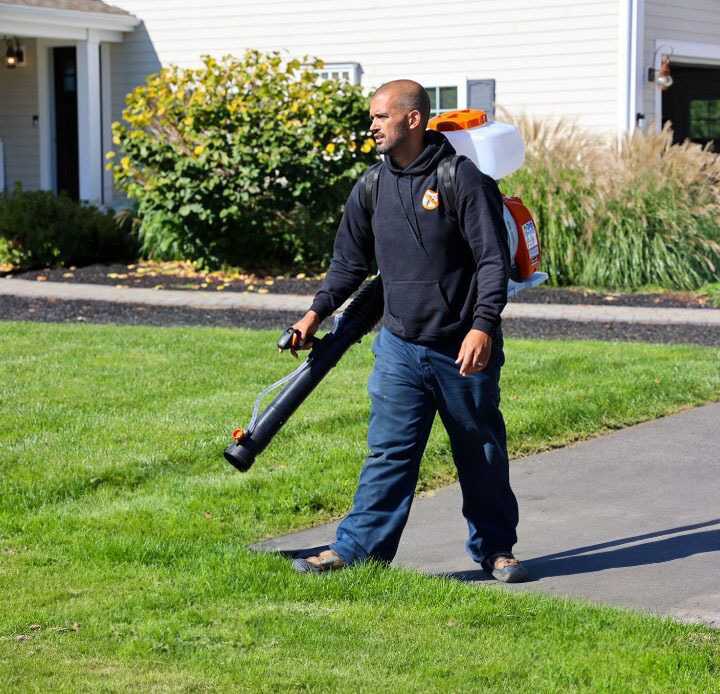
How a treatment works: A technician applies a barrier spray to the foliage, shrubs, ground cover, and wooded edges around your property — the surfaces where adult mosquitoes rest during the day. The treatment binds to plant surfaces and continues working until rain or time breaks it down, which is why the three-week interval is designed to maintain continuous coverage through each mosquito generation cycle.
Organic options: SSMC offers organic treatment formulations for homeowners who prefer botanical active ingredients. These use chrysanthemum-derived pyrethrins and related botanicals rather than synthetic pyrethroids. Efficacy is slightly shorter per application, but the safety profile around pets and children is a common reason Kingston families choose this option.
What Professional Tick Control Looks Like in Kingston
Tick treatment follows a similar interval structure but targets different zones. Blacklegged ticks concentrate at ground level in leaf litter, brush piles, wood edges, and ornamental mulch beds — particularly in the 9-foot transition zone between maintained lawn and wooded or naturalized areas.
A tick treatment addresses these ground-level harborage areas directly. The treatment is applied at the lawn/wood interface, around stone walls (a common tick hotspot), under decks, and in any ornamental planting beds adjacent to turf.
For Kingston properties with significant wooded borders, SSMC technicians will flag areas of elevated concern during the first visit. Knowing where your property’s high-pressure zones are is the starting point for effective control.
Timing matters: The most important tick treatment of the year in Kingston is the one that lands before Memorial Day weekend. This is when nymphal blacklegged tick activity — the life stage responsible for the majority of Lyme transmissions — is accelerating. Starting a program in April means you’ve already established residual protection before peak nymphal season arrives.
Combined Mosquito and Tick Programs
Most Kingston homeowners who sign up address both pests simultaneously. The treatment areas for mosquito and tick control overlap significantly, and bundling both into a single seasonal program is more cost-effective than running them separately.
The combined program runs on the same eight-visit structure, covering mosquito barrier spray and targeted tick treatment in a single technician visit. For Kingston properties — particularly those near the Silver Lake corridor, Jones River wetlands, or conservation land — the combined program addresses the full range of biting pest exposure a South Shore yard faces.
Pricing and Seasonal Programs
SSMC charges approximately $90 per visit for the standard seasonal program. Most Kingston properties fall in the standard residential tier, though larger lots or properties with extensive wooded borders may be quoted differently.
Prepay discount: Signing up and paying for the full season before April 1 receives a 15% discount off the seasonal total. For homeowners who know they want coverage, this is the most straightforward way to reduce the cost.
Referral program: SSMC runs a refer-a-neighbor program: refer a friend, neighbor, or family member who signs up and you receive a $75 credit. The person you refer receives $50 off their first season. In Kingston neighborhoods where several homes are near the same woodline or water feature, coordinating with neighbors often makes practical and financial sense — adjacent treated properties reinforce each other’s protection.
Frequently Asked Questions from Kingston Homeowners
Do I need to be home during a treatment? No. Technicians work the exterior of the property. You just need to make sure pets and children stay inside during the treatment and for about 30 minutes afterward while the product dries.
What if it rains right after a treatment? Light rain within a couple hours of application can reduce residual effectiveness. SSMC has a callback policy for treatments affected by significant rain shortly after application.
How quickly will I notice a difference? Most Kingston customers report a noticeable reduction in mosquito activity within the first few days after the initial treatment. Full population reduction builds over the first two or three visits as the program addresses successive mosquito generations.
Does treatment affect pollinators? Barrier spray is applied to resting surfaces — not to open flowers or active feeding areas. Applications are typically done in the morning before peak pollinator activity. Organic formulations have an additional margin of safety for pollinator-sensitive properties.
Is Silver Lake proximity a concern for product runoff? SSMC technicians are trained on setback requirements from water bodies. Treatments are not applied to surfaces with direct runoff paths to open water, consistent with MA pesticide application regulations.
Getting Started with Mosquito and Tick Control in Kingston
The best time to start a program is before you need it. For Kingston homeowners, that means signing up in March or early April to lock in the first treatment before mosquito emergence and before nymphal tick season peaks.
To get a quote for your Kingston property, visit the contact page or the Kingston service area page. The quote process is straightforward — lot size, proximity to wooded or wet areas, and whether you want mosquito-only, tick-only, or a combined program are the main inputs.
SSMC has treated Kingston homes for over a decade. The combination of local geography knowledge, organic options, and a treatment schedule built around Plymouth County’s actual pest pressure calendar is what separates a local program from a national franchise applying a generic schedule to every zip code they cover.
South Shore Mosquito & Tick Control serves Kingston and 42 other towns across the South Shore and Cape Cod. View all service areas →