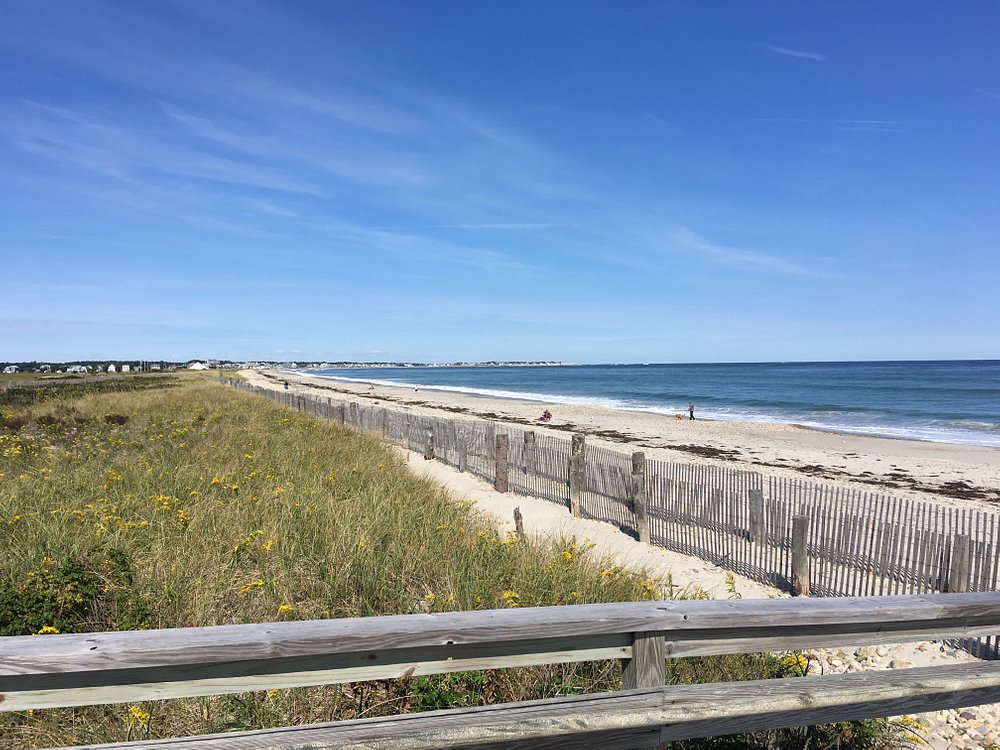
Duxbury sits at an interesting intersection of coastal geography and suburban woodland that creates year-round mosquito and tick pressure unlike most South Shore towns. On one side you have Duxbury Bay, the marshes along the Green Harbor River, the tidal flats off Powder Point, and the salt marsh systems that line the back side of Duxbury Beach. On the other, you have heavily wooded inland neighborhoods — Surplus Street, Tobey Garden, the Chandler’s Cove area — where deer move freely and blacklegged tick populations are well established.
The result is a town where coastal-specific mosquito species layer on top of the standard inland mosquito and tick pressure that South Shore homeowners generally deal with. This post covers what Duxbury properties actually face, how SSMC’s exterior treatment program addresses it, and what a full season looks like for the area.
The Coastal Mosquito Problem in Duxbury
Salt Marsh Species
Most South Shore towns deal primarily with Culex pipiens and Aedes vexans — the common house mosquito and the floodwater species that surges after rain. Duxbury has both, but its coastal geography introduces an additional species that inland towns largely don’t contend with at the same level.
Ochlerotatus sollicitans — the salt marsh mosquito — is one of the most aggressive biting species in New England. It breeds in the high marsh zone, where salt water floods and recedes with tidal and storm cycles, leaving behind pools in the marsh grass where eggs hatch in large numbers. Salt marsh mosquitoes are strong fliers. They routinely travel two to five miles from their breeding source, which means Duxbury properties nowhere near the marsh can still experience significant pressure from this species on the right wind and tide conditions.
For Duxbury homeowners near the bay side or within a mile of the marsh system, this is a meaningful factor that shapes what mosquito activity feels like compared to a purely inland South Shore town. Evening and early morning activity in July and August can be intense on the days following a high tide series.
The other species in the Duxbury mix:
- Culex pipiens — the common house mosquito, dusk-and-dawn biter, West Nile Virus vector, breeds in stagnant fresh water throughout the neighborhood
- Aedes vexans — the floodwater species, surges after rain, aggressive daytime biter across the full property
- Coquillettidia perturbans — marsh-associated, peaks late summer, linked to EEE transmission in MA, feeds through the evening
None of these are meaningfully controlled by repellent candles, traps, or consumer sprays at the yard scale. The species diversity and flight range involved require a consistent professional exterior program to produce real results.
Why Coastal Properties Are Different
The salt marsh breeding source is outside your property and largely outside your control. You cannot eliminate it the way you can drain a birdbath or clear a clogged gutter. What you can control is the attractiveness of your property as a resting and harborage zone — and that’s exactly what SSMC’s exterior barrier treatment addresses.
Adult mosquitoes — including salt marsh mosquitoes after a flight inland — need to rest. They land in shaded vegetation, under leaf canopy, in ornamental plantings, and across lawn areas to wait out the daylight hours before feeding. Treating those surfaces consistently throughout the season is what reduces the population that’s actually present on your property, regardless of where they came from.
Tick Pressure in Duxbury
Duxbury’s inland neighborhoods carry tick pressure that matches the broader South Shore pattern — blacklegged ticks (Ixodes scapularis) concentrated at wooded edges, in leaf litter, along stone walls, and in ground cover plantings. The deer population that moves through Duxbury’s wooded corridors — particularly the stretches connecting conservation land between the bay side and Route 3A — keeps tick pressure well established throughout the warm season and into fall.
Lyme disease, anaplasmosis, and babesiosis are all transmitted by blacklegged ticks in Massachusetts. Plymouth County, which includes Duxbury, is one of the highest Lyme incidence counties in the state. For Duxbury families with wooded backyards or conservation land borders, tick exposure is a year-round consideration — adult blacklegged ticks remain host-seeking on warm days well into November.

How the SSMC Exterior Program Works in Duxbury
SSMC treats mosquitoes and ticks together as a single bundled exterior program. Every visit addresses both. The standard program is eight treatments across the season, spaced on a three-week interval, beginning in late April or early May and running through October.
What Gets Treated
Every visit covers the full exterior of the property — the entire yard, not selected zones. For a typical Duxbury property that includes:
- Open lawn areas — the full turf surface across the property
- Perimeter shrubs and ornamental plantings — primary adult mosquito resting surfaces
- Low-hanging tree canopy along the lawn edge — where mosquitoes shelter during the day
- Ground cover beds — pachysandra, vinca, ivy, and similar plantings hold moisture and provide dense harborage for both mosquitoes and ticks
- Wooded borders and transition zones — the lawn/wood interface where blacklegged tick density is highest
- Stone walls and fence lines — classic tick harborage on coastal New England properties
- Under decks and around outbuildings — particularly relevant for Duxbury properties with garage structures or sheds adjacent to wooded areas
- Leaf litter accumulation zones — wherever debris collects along the property edge
The full-property approach matters in Duxbury specifically because of the salt marsh mosquito flight dynamic. These aren’t insects that stay in one corner of the yard. They come in across open areas and settle wherever suitable resting conditions exist. Treating the complete exterior — lawn included — is what intercepts them.
Treatment Timing in Duxbury
The three-week interval calibrated to mosquito and tick biology holds in Duxbury, but the coastal context adds a nuance worth understanding. Salt marsh mosquito emergence is tied to tidal flooding cycles in addition to temperature, which means pressure in Duxbury can spike more abruptly than in purely inland towns following a series of high tides in late June or July. The consistent treatment schedule — not reactive spraying — is what maintains protection through those spikes by keeping the property in a treated state before and after them.
The critical spring timing still applies: the treatment that lands before Memorial Day is the most important of the year for tick control, catching nymphal blacklegged tick activity before it peaks.
Organic Options
SSMC offers organic botanical treatment for Duxbury homeowners who prefer it, using chrysanthemum-derived pyrethrins and related natural active ingredients. Many Duxbury families choose organic for properties near the bay, marsh systems, or conservation land — the natural active ingredients break down more quickly in the environment, which matters on coastal properties where runoff paths and adjacent habitat are a consideration. Full-property coverage is the same regardless of which formulation is selected.
Duxbury-Specific Considerations
Properties Near the Marsh or Bay
If your property is within a half mile of the Duxbury Bay marshes, Green Harbor River corridor, or the back side of Duxbury Beach, you should expect a higher baseline of mosquito pressure than comparable inland properties — and plan the exterior program around that reality. The source population isn’t on your property, but the resting and feeding population absolutely is, and that’s what treatment addresses.
Conservation Land Borders
Duxbury has substantial conservation holdings — Tarkiln Hill Reservation, the Duxbury Bay marshes, and the Duxbury Rural and Historical Society lands among others. Properties bordering these areas face continuous tick and mosquito pressure from an untreated adjacent zone. SSMC’s full-property exterior treatment covers your side of that boundary consistently throughout the season.
Setbacks and Water Proximity
SSMC technicians follow all Massachusetts setback and buffer requirements for pesticide application near water bodies, tidal areas, and wetlands. On coastal Duxbury properties, the technician will assess the property on the first visit and treat accordingly within applicable state regulations. Barrier spray is applied to vegetation — not to water surfaces or tidal areas.

Pricing and How to Save
The combined mosquito and tick seasonal program covers the full exterior of your Duxbury property across eight visits. Most residential properties in Duxbury fall in the standard tier, with larger lots quoted based on treatable acreage.
Prepay discount: Signing up and paying for the full season before April 1 earns a 15% discount off the total. For Duxbury homeowners planning to run the full season, this is the most straightforward way to reduce the cost.
Referral program: SSMC’s refer-a-neighbor program gives you a $75 credit when someone you refer signs up, and the person you refer gets $50 off their first season. In Duxbury neighborhoods where adjacent properties share the same marsh border, woodline, or conservation edge, coordinating with neighbors reinforces protection on all sides.
Frequently Asked Questions from Duxbury Homeowners
We’re close to the bay and the marsh. Will treatment actually work given where the mosquitoes are coming from? Yes — and this is an important distinction. You can’t eliminate a salt marsh breeding source, but you can treat the property those mosquitoes land on. SSMC’s exterior program addresses adult mosquitoes in their resting phase across your full property. Salt marsh mosquitoes that fly in from the marsh are intercepted on the treated surfaces when they settle. Consistent treatment is what keeps the population that’s actually on your property low throughout the season.
Do you treat near the water? SSMC follows all Massachusetts setback and buffer requirements for pesticide application near coastal and wetland areas. The technician reviews each property individually. Barrier spray is applied to vegetation on your property — not to open water, tidal zones, or marsh areas.
We back up to Tarkiln Hill conservation land. Does that complicate tick control? Conservation borders are one of the highest-pressure tick scenarios in Duxbury. The consistent pressure from adjacent untreated land is exactly why a full-season exterior program matters more, not less, for these properties. SSMC treats your full exterior including the transition zone at your property edge — maintaining that buffer consistently is what produces results against ongoing pressure from next door.
When should we start? Late March or early April for scheduling, with the first treatment landing in late April or early May. For Duxbury, starting early matters — both for getting ahead of nymphal tick season before Memorial Day and for establishing residual protection before the first significant salt marsh mosquito emergence of the season.
Getting Started
To get a quote for your Duxbury property, visit the Duxbury service area page or the contact page to request a callback. You can also review the full program details on the services page. The quote process is straightforward — lot size and proximity to coastal or wooded areas are the primary inputs, and every program includes full-property mosquito and tick treatment as a bundled exterior service.
SSMC has been treating Duxbury properties since 2012. The combination of coastal mosquito species and inland tick pressure that defines Duxbury is a well-understood part of the territory the crew covers every season.
South Shore Mosquito & Tick Control provides exterior mosquito and tick treatment in Duxbury and 42 additional towns across the South Shore and Cape Cod. View all service areas →